
Hello, Fellow Travelers!
If you're planning a road trip across Italy, you'll inevitably encounter one issue: how to pay tolls. Italy has both toll highways (autostrade) and free motorways, with the free motorways being a clear alternative to toll highways. Italian motorways—known as autostrade—are among the most extensive and best-maintained in Europe, but most of them, along with some specific sections, require payment.
The toll system in Italy works by means of automatic barriers that record the entry and exit of each vehicle, calculating the amount according to the distance traveled and the category of the car.
In this article, I'll explain how tolls work, what payment options are available, and give you some helpful tips to avoid fines or confusion during your trip.
How the Toll System Works in Italy
Italian motorways are managed by various concessionary companies, the best known being Autostrade per l'Italia. Upon entering a motorway (autostrada), you will find an entrance booth where the system registers vehicle entry and issues a toll ticket. You must keep this ticket until you exit, where your vehicle's exit is registered and the toll is calculated based on these points.
Tolls are paid at the exit barriers, and there are different lanes depending on the payment method you choose:
- White or blue lane: manual or card payment
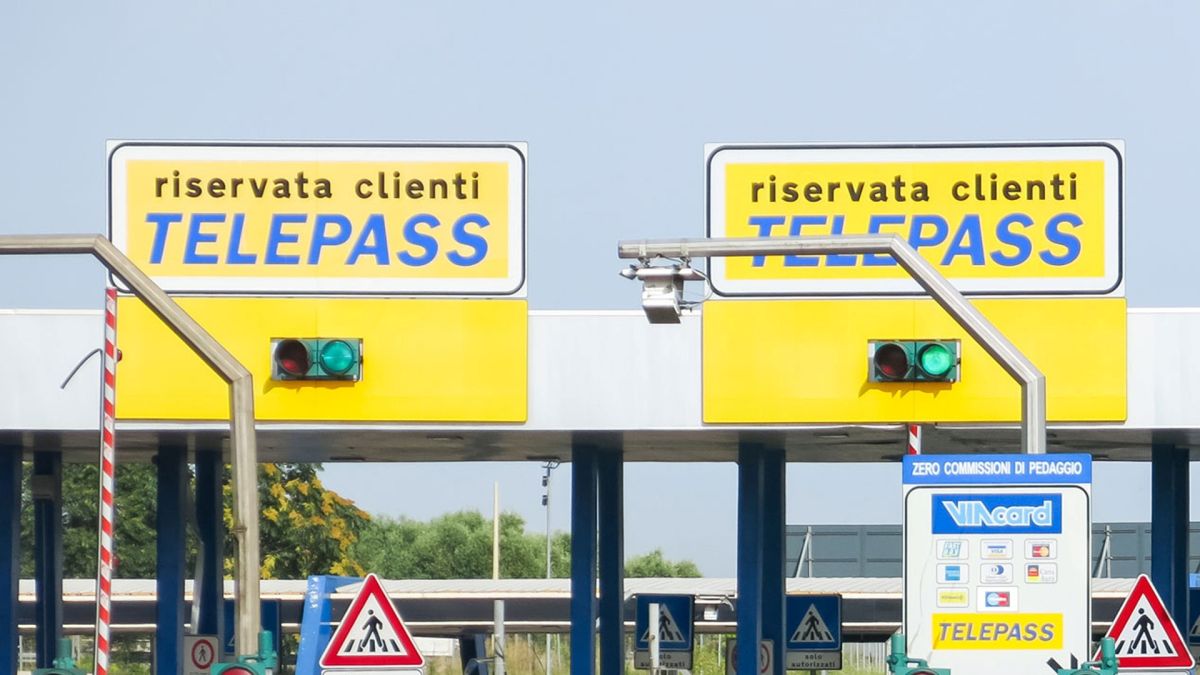
- Yellow lane: reserved for Telepass (electronic toll collection)
- Green lane: payment by cash or banknote
There are also some exceptions to the traditional toll system, such as certain free sections or sections with fixed rates, which are worth knowing before planning your route.
Types of Tolls in Italy
The toll system in Italy is varied and adapted to the different characteristics of the country's highways and roads. There are two main categories of tolls: those applied to highways and those for tunnels and special bridges.
On Italian motorways, tolls are calculated based on distance traveled and vehicle category. On the other hand, some tunnels and bridges, such as the Mont Blanc tunnel, have separate, fixed-price tolls.
Furthermore, Italy has implemented different types of toll payment systems. Electronic toll collection allows drivers to use electronic devices to pay without stopping at the booths. There are also sections with "Free Flow" automated systems, where payment is made later via the internet or authorized points, identifying the vehicle by its license plate.
In summary, tolls in Italy can vary quite a bit depending on the section, vehicle category and collection system used, so it's important to check in advance before starting your trip.
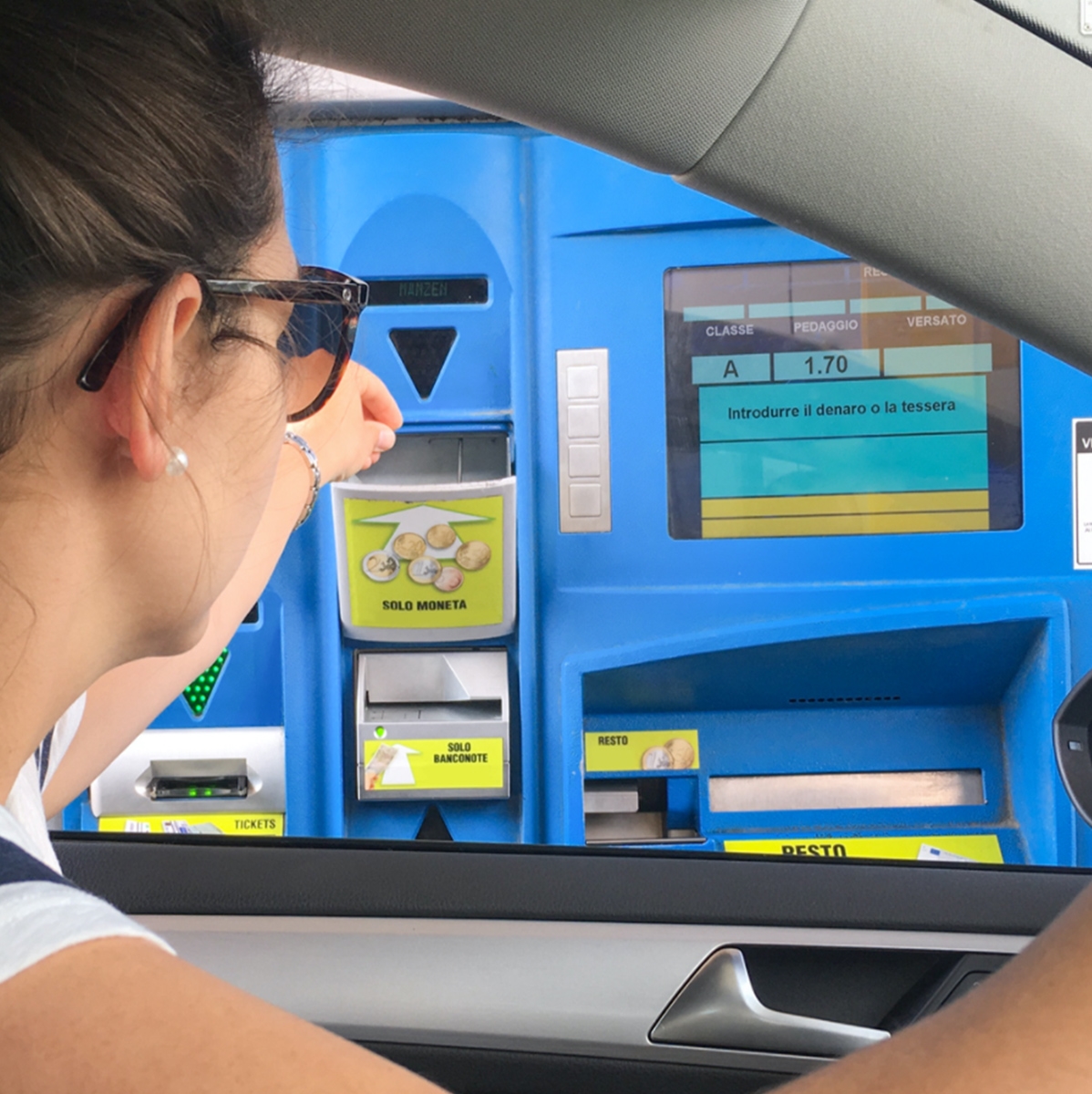
Toll Payment Methods
When it comes to paying tolls in Italy, there are several alternatives suited to every type of traveler. It's worth noting that, whichever method you choose, your payment data is protected and the system offers a wide range of solutions so you can travel without setbacks.
1. Payment by Cash or Card
The simplest option for foreign travelers.
You can pay the toll in Italy directly at the booths with:
- Coins or banknotes in euros
- Credit or debit card (Visa, Mastercard, Maestro)
- Some stations also accept contactless or NFC-enabled payments
Some sections have automatic booths where you insert the entrance ticket and then the card so the system can calculate and charge the amount due.
2. Telepass (Electronic Toll Collection)
Telepass is Italy's electronic toll collection system, very popular among local drivers and trucks.
It works with an electronic device installed in the vehicle that communicates with the toll barriers as it passes through. There's no need to stop: the system registers the license plate and automatically charges the toll to the customer's account.
Advantages of Telepass:
- Save time, as there is no need to stop at the booths
- It allows driving in the exclusive yellow lanes
- It can also be used in some parking lots and ferries
For tourists, there are temporary versions such as the European Telepass, available through car rental services or via online registration.
3. Automatic "Free Flow" Systems
On some newer sections, such as the A36 (Autostrada Pedemontana Lombarda), the Free Flow system is used, without physical toll booths. The vehicle is identified by its license plate, and payment must be made online within 24 to 48 hours, either through the official website or at authorized payment points.
Failure to pay on time may result in an automatic fine.
This same system is also used in some restricted urban traffic zones, such as Milan's Area C, and in specific sections such as the Strait of Messina or the Lentate sul Seveso crossing, so it's worth paying attention to local signage.
Toll Rates and Calculation
The toll price depends on three factors:
- Distance traveled between the entrance and the exit
- Vehicle category (car, motorcycle, truck, bus)
- Section or concessionary company
For example, traveling the Autostrada del Sole (A1), between Milan and Reggio Calabria, can cost between 40 and 60 euros, depending on the type of vehicle and the exact route.
In special tunnels, such as Mont Blanc, an independent toll with its own rates is charged. You can calculate the approximate cost of the trip on the official Autostrade per l'Italia website, which shows detailed reports, expenses and available discounts.
Toll Exemptions and Discounts
In Italy, the toll system includes certain exemptions and discounts. Electric vehicles and some hybrid models can access bonuses or reductions in toll amounts on certain highways.
There are also exemptions for vehicles transporting hazardous materials on certain specific sections, subject to particular regulations from each concessionary company.
Discounts are also available for drivers who use electronic toll collection frequently or who take part in loyalty programs offered by some concessionary companies, designed for those who regularly travel the same route.
Tolls in Italy for Transport Companies
Transport companies that regularly travel on Italian highways can access special agreements with the different concessionary companies, which usually include preferential rates based on traffic volume and vehicle type.
These agreements also make it possible to simplify billing and expense control, since they centralize toll payments for the entire fleet into a single account, with detailed reports per vehicle and per section traveled.
Common Problems and Solutions When Paying Tolls
When paying tolls in Italy, drivers may encounter some inconveniences, such as a lack of change at the toll booths, problems with their cards, or malfunctions in the electronic toll collection devices.
If the electronic toll collection device malfunctions or the barrier fails to open, you can use the emergency intercoms installed in the toll booths to contact the operator directly. If you are unable to pay immediately, you can request a receipt or voucher to pay the amount later.
Tips for Driving on Italian Motorways
- Respect the speed limit: 130 km/h for cars, 110 km/h for rainy sections and 80 km/h for trucks
- Don't lose your toll ticket: if you do, you will be charged the maximum rate for that section
- Always keep cash on hand: in case a machine doesn't accept cards
- Use Telepass if you travel frequently: during peak season, the barriers can experience heavy traffic
- Check the tolls in Italy before your trip: especially if your route includes tunnels or mountain sections
Conclusion
Understanding how tolls work in Italy will help you avoid surprises and enjoy a smooth journey on Italian highways.
You can pay with cash, card, Telepass, or in some cases, through automatic license plate recognition systems.
Whichever option you choose, the Italian toll system is efficient, safe and well signposted, with a network connecting all the major cities in the country and the main tourist destinations in Europe.
Contact us at Trayectis and let your adventure begin with the freedom and confidence that only your minivan can provide!