
Hello, Fellow Travelers!
Knowing how to pay for parking in Italy is essential if you plan to travel around the country by car or rental car. It's important to check the vehicle's capacity to ensure there's enough space for luggage and passengers. Each city has its own parking system, with zones, rates, hours, and restrictions that you should understand to avoid fines. Generally, the use of streets and parking lots is regulated by painted lines and signs indicating the zone type and payment method. Furthermore, having clear information and accessible payment options greatly simplifies the experience for drivers.
Next, I'll explain how the system works and what options are available. The parking and car rental market in Italy is very diverse and competitive, so it's a good idea to compare alternatives to find the best option. In fact, knowing these details can make all the difference to your travel experience and help you move around Italy's historic city centres with ease.
Types of Parking Zones in Italy
In almost all Italian cities, parking is organized with a colour code on the ground: the painted lines are fundamental, so it is important to identify each line and the markings on the pavement to avoid confusion.
- White lines: free, but often reserved for residents or with limited time via time disc (clock)
- Blue lines: paid lines, the most common for tourists
- Yellow lines: exclusively for people with special permits, services or company vehicles
The markings on the ground help identify permitted areas and restrictions associated with each parking zone. If in doubt, always consult the information signs to avoid fines.
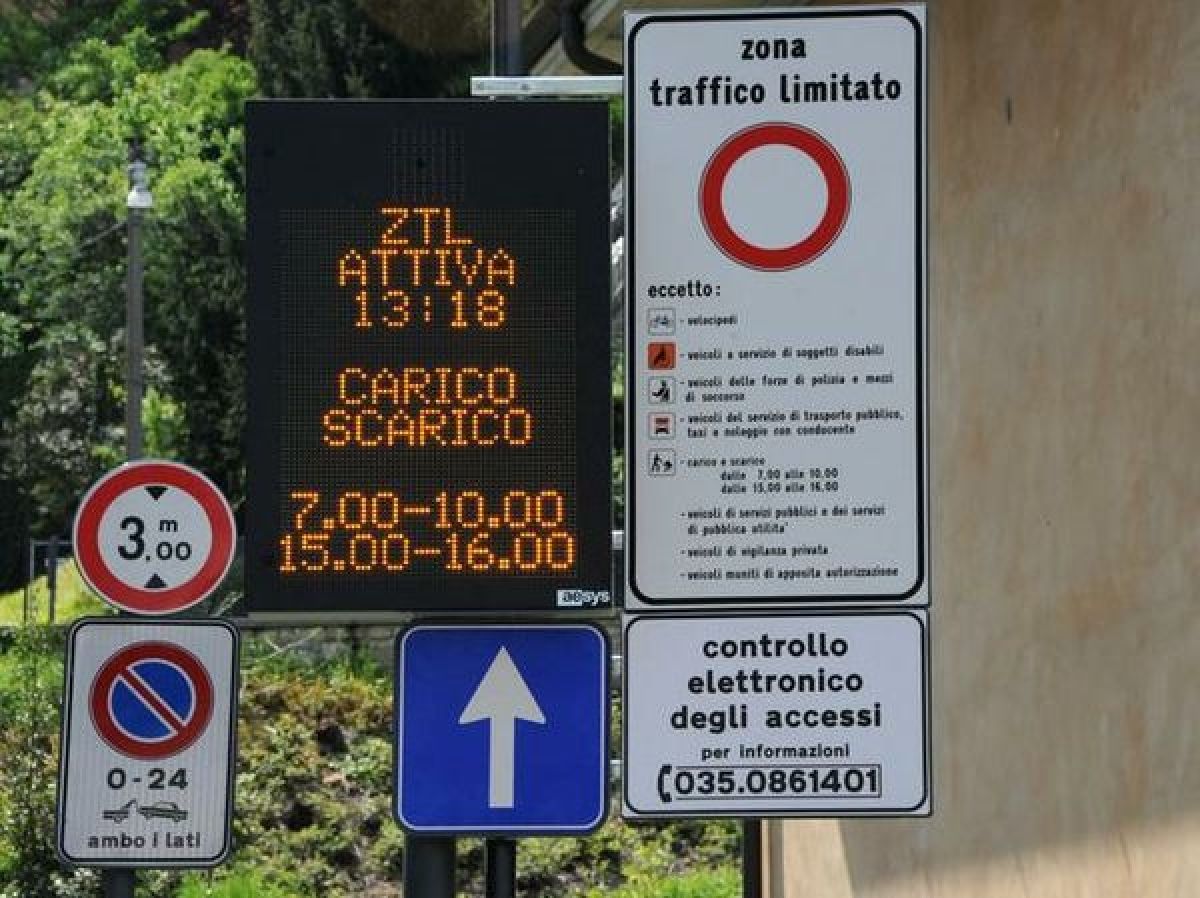
The signs next to each parking area indicate the hours, prices and possible restrictions, such as holidays or limited transit zones (ZTL), where there is a restriction on access and you cannot enter without authorization.
Limited Traffic Zones in Italian Cities
Limited traffic zones, known as ZTLs, are special areas located primarily in the centres of many Italian cities. Access to these zones is restricted for most vehicles during certain hours, with the aim of reducing traffic, protecting historical heritage, and improving air quality in urban centres.
Access to the ZTL (Limited Traffic Zone) is controlled by cameras that record the license plates of cars entering or leaving the area. If an unauthorized vehicle enters one of these areas without the corresponding permit, a fine is automatically issued and sent directly to the registered owner of the vehicle, even if it is a rental car.
Therefore, it is essential to pay close attention to the signs and signals indicating the start of a ZTL (Limited Traffic Zone), as well as the specific schedules and restrictions for each city. In some cases, hotels located within these zones can arrange temporary permits for their guests, but it is always advisable to check this information in advance.
Before driving through the centre of any Italian city, check the location of the ZTLs (Limited Traffic Zones) and plan your route to avoid restricted areas. This way, you can enjoy your time in Italy without worrying about unexpected fines related to restricted traffic.
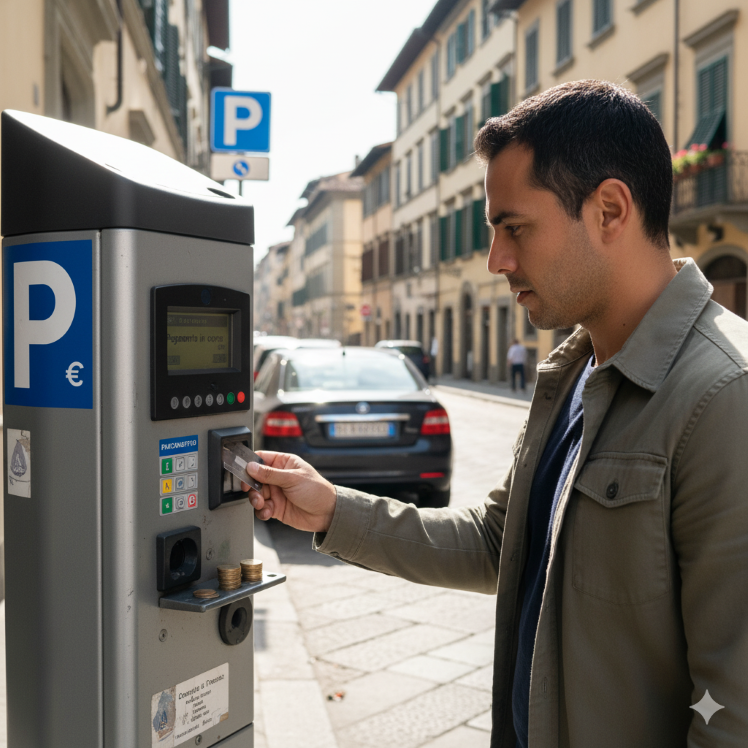
How Do I Pay for Parking?
Payment is usually made via an automated machine located near the parking spaces or inside the garages. This machine allows you to select the parking time, enter the corresponding amount, and obtain a ticket that must be displayed visibly on the windshield.
You can pay in several ways, depending on the parking lot: one of the most common methods is paying with coins or bills: the machine accepts euros and issues a ticket that you must leave visible on the windshield. Another way is by credit or debit card: more and more machines allow contactless or credit card payments. There is also the option to pay through mobile apps: in many Italian cities, you can pay for parking through apps like EasyPark, MyCicero, or Telepass Pay. Finally, another option is paying at an automated payment machine or garage: if you park in an indoor parking garage, you pay for your ticket before leaving at an automated machine or at the counter.
If you do not have a ticket, it is recommended to leave a piece of paper with the arrival time clearly written on it to avoid possible fines.
To Pay for Parking Correctly, Follow These Steps:
- Check the availability of space in the delimited area.
- Select the appropriate payment method on the machine or application.
- Enter the corresponding amount.
- Get the ticket and place it visibly on the windshield or, failing that, use a piece of paper with the arrival time.
- If the parking is in a restricted zone (ZTL), remember that it is necessary to complete the purchase or activation step of a special ticket to legally access it.
In some public and private parking lots, especially near train stations or hotels, it's also possible to pay by the hour, by the day, or even reserve in advance online. It's essential to check space availability before parking to avoid problems.
Prices and Schedules
Parking fees vary depending on the area and size of the city. In historic city centres, the price can range from €1 to €3 per hour, while more economical options can be found in the surrounding areas or those further from the center. Payment hours are usually from 8:00 a.m. to 8:00 p.m., although in some cases they also apply at night or on weekends. Changes in these hours can often cause confusion and fines for minor infractions, such as vehicle orientation or failure to obey poorly visible signs. Furthermore, some cities have implemented new pricing systems or regulations, so it is essential to stay informed of any updates.
If you're unsure, always check the sign: it indicates the hours, the hourly rate, and whether parking is free outside of those hours. Keep in mind that in certain areas, parking availability is not guaranteed, especially during peak season.
Practical Tips
Tip: Before parking in Naples or any city in southern Italy, carefully check the signs and look for safe areas to avoid problems with fines or restrictions.
- Read the signs carefully before parking; some streets may have restrictions due to markets, cleaning, ZTL (Limited Traffic Zone), or the presence of informal parking attendants, especially in southern cities
- Don't leave your car without a visible ticket, even if you plan to return quickly
- If you're using an app, check the zone or plaza number before confirming payment
- In paid parking lots, keep your ticket until your vehicle has left
- If you receive a fine, you can pay it at the town hall, by email, or directly on the municipality's website. Keep in mind that the most common parking problems in Italy are usually related to ZTL restrictions and fines for parking in prohibited areas
- Many hotels in the city centre offer access to private parking at special rates or with discounts. It's advisable to choose a hotel that offers parking or manages permits for ZTL zones to avoid problems during your stay
If you're traveling to southern Italy, keep in mind that parking regulations can vary, and it's more common to find informal parking attendants on the street. Pay close attention to regional differences and follow these tips to avoid problems.
Alternatives to Parking in the City Centre
To reach the interchange areas, you may need to take a main road or even a motorway. In this case, keep in mind that many motorways in Italy operate on a toll system: upon entering, you receive a ticket, and upon exiting, you pay the corresponding amount based on the distance travelled.
In large cities like Rome, Florence, or Milan, it's advisable to leave your car in transport hubs or near a train station and continue your journey by public transport (metro, buses, or trams). Besides avoiding traffic and restricted traffic zones, you'll save both time and money.
Some car parks are connected to the transport system and offer combined tickets that include the parking fee and the metro or bus ticket.
Conclusion
Knowing how to pay for parking in Italy will save you from surprises and allow you to enjoy your trip worry-free.
The system is simple once you understand the lines, the machines, and the hours.
Generally, everything is well signposted, but it's always a good idea to have some cash on hand and pay attention to restricted areas.
With a little practice, parking in Italy can be even easier than in other European countries!
Contact us at Trayectis and let your adventure begin with the freedom and confidence that only your minivan can provide!